When Should You See a Physiotherapist for Back Pain?
Back pain can affect everyday activities, work, exercise and sleep. While mild…


Oct 30, 2026
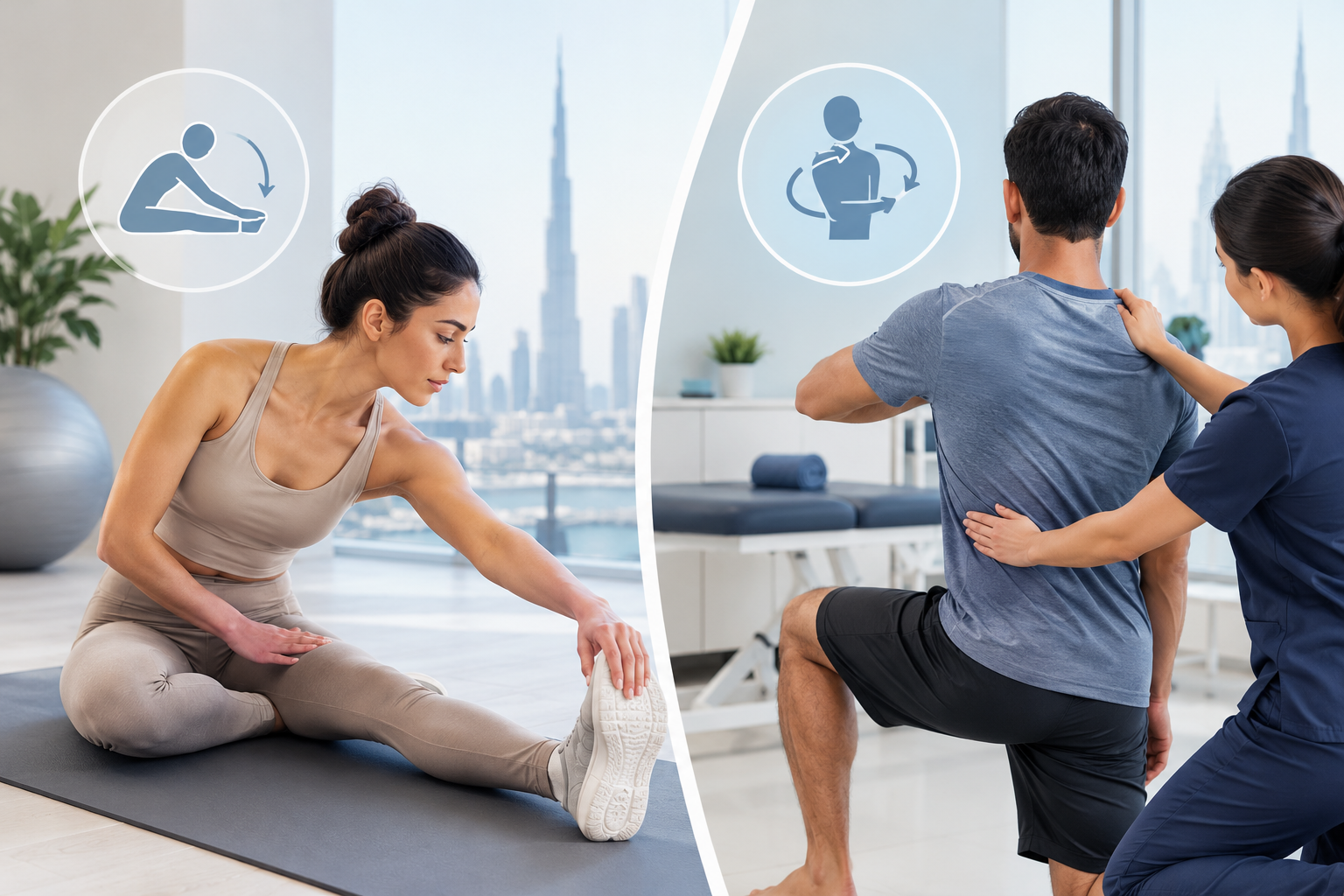
Maybe you can touch your toes with no trouble, yet squatting feels awkward and reaching overhead is a struggle. Being flexible doesn’t always mean you move well.
People often throw around flexibility and mobility as if they mean the same thing. They’re closely linked, but there’s one important difference between them, and once you understand it, you’ll have a much better idea of whether your body needs more stretching or more control. For many people, the answer is a bit of both.
No, though the two are closely related. There’s a distinct difference between flexibility and mobility.
Flexibility is how far a muscle can lengthen. Picture yourself lying on your back while someone gently lifts your straight leg towards the ceiling. How high it goes comes down mostly to your hamstrings, and you’re not doing any of the work.
Mobility is about how well a joint moves through its range when you’re the one in control. Try lifting that same leg as high as you can with no help. That’s a mobility test. Your muscles still need enough length, but they also need the strength and coordination to get the joint up there and keep it there.
When people talk about flexibility vs mobility, here’s the easiest way to think about it. Flexibility is the range you have available. Mobility is how much of that range you can actually use.
Yes. It happens more often than most people realise.
Plenty of us can drop into a deep stretch with gravity or a strap doing the heavy lifting, then find it surprisingly hard to hold that same position unaided. Dancers and regular yoga-goers sometimes land in this group. Their muscles lengthen easily, but the strength at the end of the range hasn’t quite caught up.
A joint that travels a long way with little control behind it may be more vulnerable under sudden load. Think of lunging for a ball on the padel court, or throwing yourself into a new HIIT class after a quiet few months.
It works the other way round as well. Someone who lifts weights regularly might move with real strength and control through the middle of a range, yet have limited flexibility at either end.
Looking at joint mobility vs muscle flexibility like this shows us where the real restriction is. A tight muscle might be what’s holding you back. Just as often, the muscle has plenty of length, and it’s the joint that lacks control.
For most day-to-day activities and sports, mobility usually matters more.
We often get asked “is flexibility or mobility better?”, as if one of them has to come out on top. Both are useful. But think about what you actually do in a normal day. Squatting down for the shopping bags, reaching up to load the boot of the car. Those movements depend more on controlling your joints than on how long your muscles are.
Good mobility tends to bring enough flexibility with it anyway, since a joint can’t move freely when the muscles around it are very tight.
Being extra flexible doesn’t automatically protect you from injury, either. A gymnast needs far more range than someone training for the Dubai Marathon.
In the end, what your body needs depends on what you’re asking it to do.
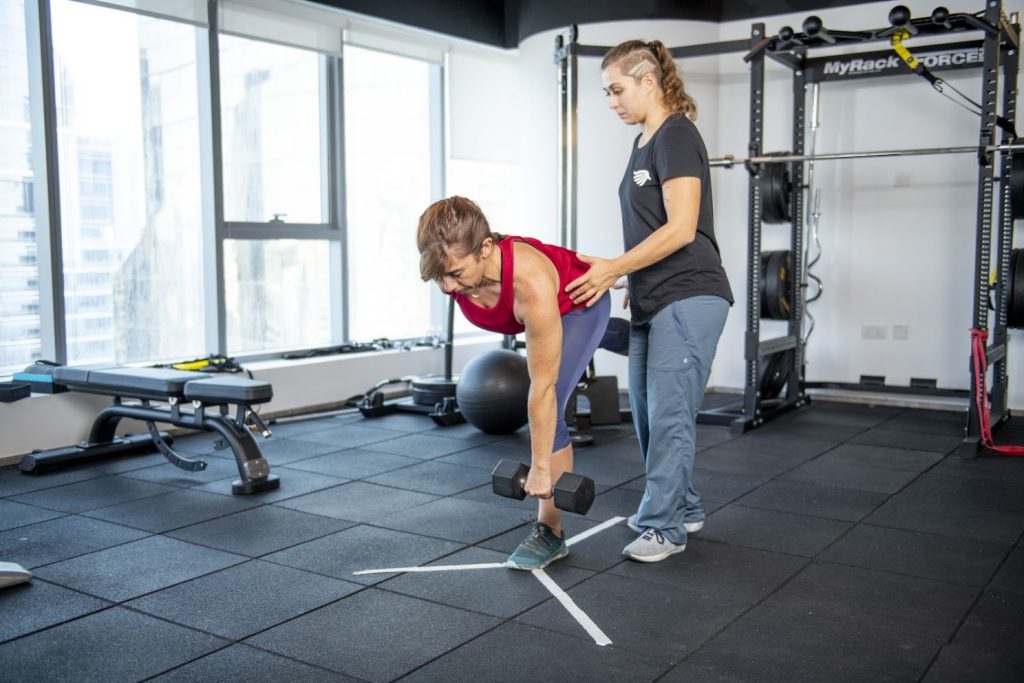
That comes down to what’s limiting you, and an assessment is the best way to find out.
Our physiotherapist will usually check your range two ways. One is how far the joint moves when someone else moves it for you. The other is how far you can move it on your own. A big gap between the two tells us you’ve got the range but can’t yet control it, so mobility and strength work would come first.
Low scores on both suggest the muscle or joint really is stiff. Adding some flexibility work alongside active movement could help there.
Plenty of people do best with a combination. A bit of gentle stretching, followed by exercises that put the new range to use, helps your body take ownership of it.
Desk-heavy routines deserve a quick mention. A long day in the office and then the drive home can leave your hips and upper back feeling stiff. Short movement breaks through the week often help more than one big stretching session at the weekend.
It can, although stretching on its own often falls short.
Static stretching, where you hold a position for somewhere between 20 and 60 seconds, tends to increase how much length a muscle will tolerate. That extra range is helpful. Your nervous system still has to learn how to control it, though.
That’s why the idea of passive stretching vs active mobility is so useful. With passive stretching, something outside you does the moving, whether that’s gravity, a strap or another person. Active mobility work asks your own muscles to do it. Controlled leg swings and slow hip circles are good examples, as are loaded movements through a full range.
Most physiotherapists use both. Stretching opens up the range, and active exercise helps you hold on to it and use it when it matters.
Everyone responds a little differently. Several weeks of consistent practice usually brings a noticeable change, but the pace depends on things like your age and injury history, plus how often you train.
There’s no single winner in flexibility vs mobility. Work out which one is holding you back, and you can put your time into the work that will genuinely make a difference.
At Scandinavian Physiotherapy in Dubai, we assess how your joints and muscles move, then build a programme around your goals, whether you’re coming back from an injury or simply want to move more comfortably at work. Book an assessment to find out what your body really needs.